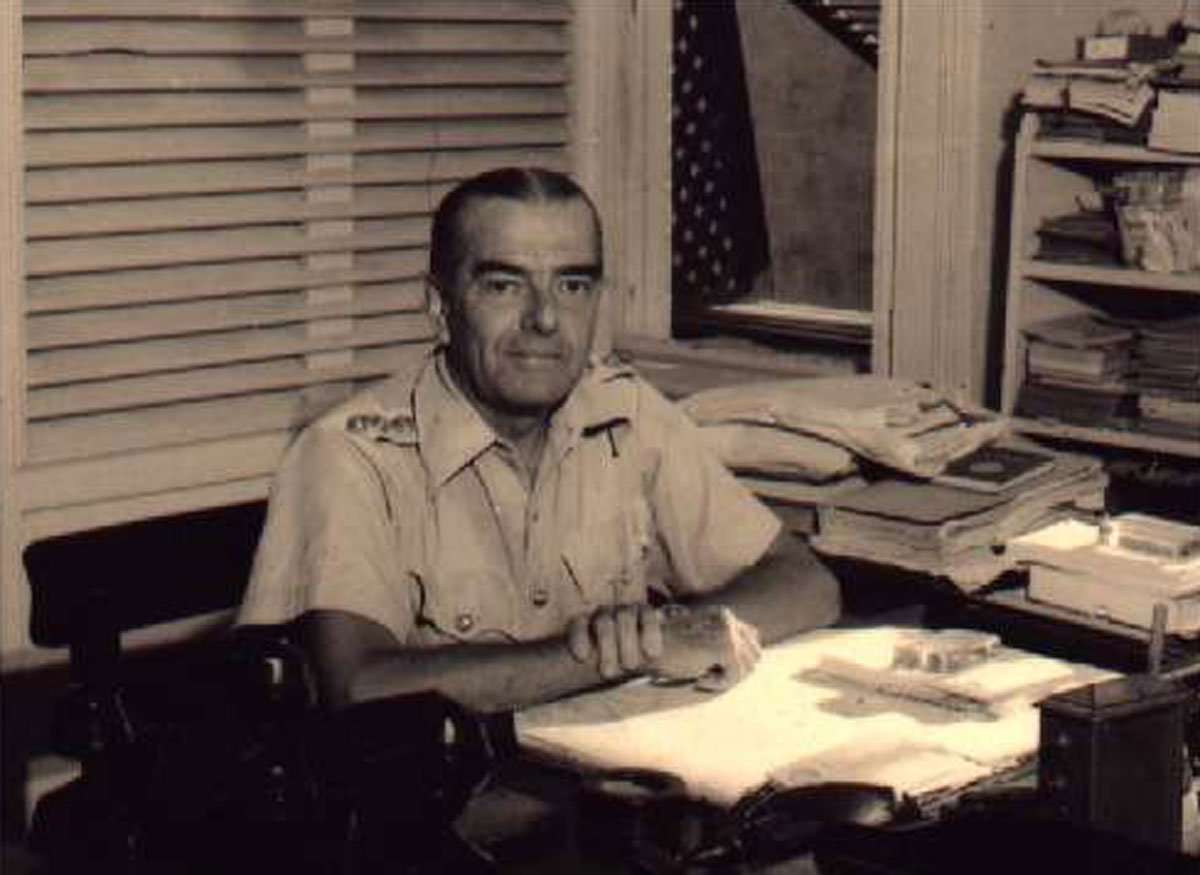
Oriel St. Arnaud Duke was born in Montserrat the second son of Dr Mansergh Duke, a Dublin doctor, and Emily née Wilkin. His family nickname was Konks. His first job was as a clerk in the Antiguan government. During World War I he volunteered for the British West India Regiment and was transferred to 10th Battalion Royal Fusiliers in Flanders where he was was twice awarded the Military Medal. He ended the war as a Sergeant.

At the end of World War I Oriel returned to Antigua and in the 1920s joined the police in the Leeward Islands. He was awarded an MBE in the New Years honours of 1932 while he was Inspector of Police in Dominica, Leeward Islands. In 1939 he was posted to Barbados as Commissioner of Police and Commandant of local forces.
The family myth was that Col. Duke was forced into retirement following an inquiry into a major fire in Bridgetown at the Central Foundry in 1948. At that time the Barbados Fire Service came under the jurisdiction of the Police Commissioner.
After his retirement Col. Duke worked as the security officer for Harrison’s department store in Bridgetown. He supported his sisters and nieces and lived long enough to hold his first great niece in 1976 on his last visit to England shortly before he died there in hospital.
In 1948, Colonel Oriel Duke found himself at the age of 52 in a position where he was being compulsorily retired. The events around his enforced retirement became known as The Duke Affair. He was not given the opportunity to defend himself. Indeed it is not entirely clear on what grounds he was forced into retirement and he was never told of any details of the reports into his command of the Barbados police that had allegedly been sent to London. The family tradition was that he had been retired following a major fire in Bridgetown in 1948. He had supported the Chief Fire Officer against the criticism of the Colonial Secretary. But it is clear from the Colonial Office papers uncovered in the UK National Archives at Kew that the road to his retirement had started as early as 1945 when the British government first became worried of a communist threat in its colonies.
After a meritorious wartime service during the 1914-18 Great War he had entered the police force in Antigua and gradually risen through the ranks until he became a Major and Inspector of Police for the Leeward Islands. At the outbreak of war in 1939 he had volunteered for military service but instead the authorities chose him to become Commissioner of Police of Barbados to lead a force that had become embattled following worker unrest in 1937. Nothing has been written about how he had started the process of bringing the police procedures into the modern world and the opportunities he gave to the black members of the force to start rising through the ranks. He was a bit of an enigma for the Barbadian plantocrats. Whilst he was a member of the all-white Royal Barbadian Yacht Club he was also a member of the Black Gentlemen’s Tennis Association. He caused outrage by giving black people lifts in his car and visiting them in their homes.
The correspondence in the Colonial Office records show that officials in Barbados raised a range of concerns, either about his efficiency or about the efficiency of the Barbados police force. Col. Duke was a West Indian and it is clear that the Colonial Office mandarins did not think very highly of locals who held official positions in the colonies. They may have been aware of his lack of education and that he had only attended a school in Britain for a few years and then at a minor public school – Cranbrook School in Kent. Whilst he had had a meritorious wartime service during the 1914-18 Great War he had served as a corporal and sergeant. Promotion from the ranks outside wartime was not the norm nor as accepted as nowadays. The officials in London perhaps accepted the criticisms laid on Col. Duke too easily.
There were certainly a lot of ruffled feathers in Barbados about his enforced retirement. There was also a fiery debate in the Barbadian Assembly on what became known as the “Duke Affair” in London and the local Barbadian press. The local assembly thought it was a good example of London interfering in local matters. With impending elections in 1948 it served the purposes of local politicians to complain about the “shoddy treatment” of a West Indian official by the high-handedness of people in London. The issue though hung around and was still being reported in June and August 1949 in the Barbados Advocate.
There is a memorial plaque for Colonel Duke at the back of St.Michael’s cathedral. It mentions that he was also Colonel Commandant of the local forces, Barbados. It is not clear what this meant – was this role a peacetime responsibility or did he have a role in protecting the island from attack such as the sinking of the Cornwallis?
Are there any people who remember those days and remember Col. Duke? To send a message to David O’Carroll please click on Contact Burts on the Navigation Bar and choose from the Subject drop down list: “Gall family – Forward to: David O’Carroll” and we will forward your message to him.


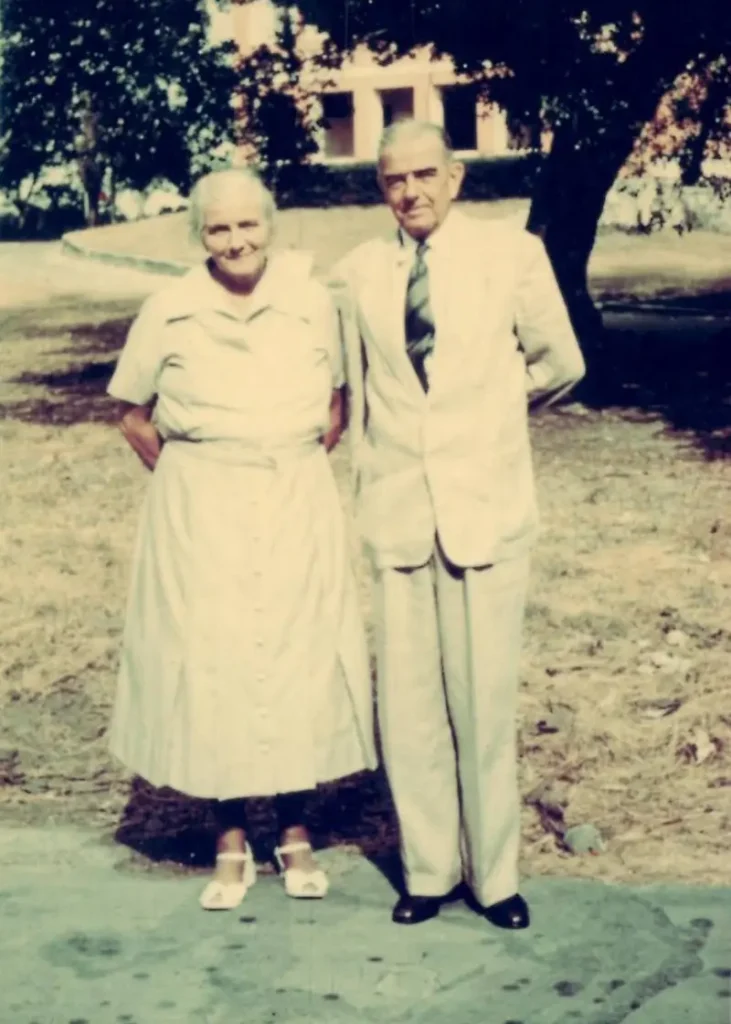
Our guest contributor is David O’Carroll, the great nephew of Col. Oriel Duke who was Commissioner of Police in Barbados from 1939-48. David is researching what became known as “The Duke Affair” and has been sifting through the now released secret Colonial Office papers that are held at the UK National Archives at Kew. David O’Carroll is particularly interested two things: 1) the police force Col. Duke inherited as Commissioner of Police in 1939 and the effect on policing of the 1937 Clement Payne riots and 2) he is searching for information on policing in Barbados during 1939-1945 and the perceived communist threat in the British Empire after the Second World War.
David O’Carroll was born in London in 1951 and was brought up in Wimbledon. After graduating from University College Swansea, University of Wales, where he attained a B.A.(Hons) in Political Science & Government, he joined the UK Civil Service. He was awarded the OBE in the 2009 New Year’s honours for his public service in the Department of Health. He is now retired and lives in Wales with his wife Elisabeth and they have three children and five grandchildren. His links to Barbados are through the Gall family who arrived on the island at the end of the 17th century. His mother, Clara Gall was born in Dominica and lived in Barbados as a teenager.
To send a message to David O’Carroll please click on Contact Burts on the Navigation Bar and choose from the Subject drop down list: “Gall family – Forward to: David O’Carroll” and we will forward your message to him.
Also by David O’Carroll available:
A short biography of Col.Duke MM,MBE
History of the Gall family of the Island of Barbadoes